

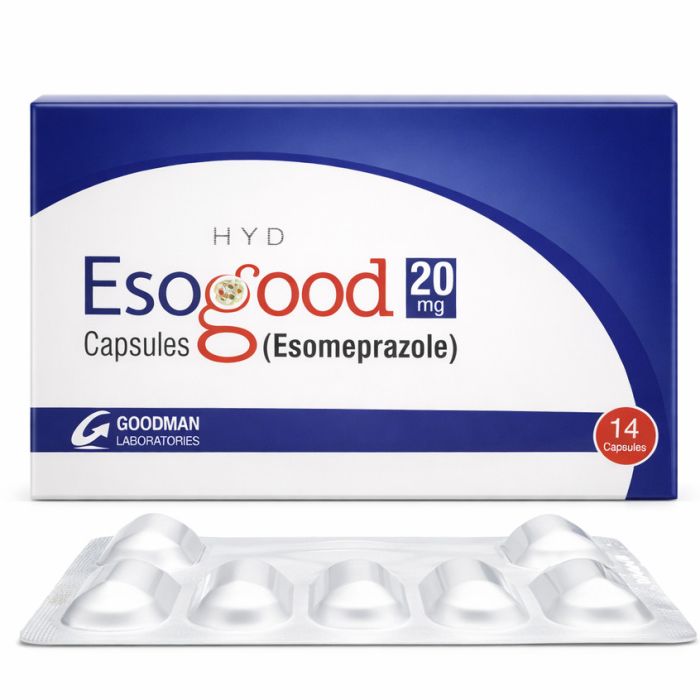
Esogood 20mg Capsules (14s)
Rs. 320.00
In stock
SKU
231681
Description
Esogood contains esomeprazole 20 mg, a proton pump inhibitor that reduces stomach acid production. It is used for acid-related conditions such as heartburn, gastroesophageal reflux disease, and selected ulcer-related disorders.
- Manufacturer Name: Goodman
- Drug Class: Proton pump inhibitor
- Dosage Form: Capsule
- Storage: Store at room temperature in a dry place, protected from heat, moisture, and direct light. Keep out of reach of children and retain in the original packaging.
- Pack Size: Pack of 14 Capsules
Esogood 20mg Capsules (14s) Available Online in Pakistan
Dwatson offers Esogood 20mg Capsules (14s) at Rs. 319.9, with fast, discreet delivery across Pakistan.
Ingredients
- Esomeprazole 20 mg
Benefits
- Relief and treatment of symptoms associated with gastroesophageal reflux disease and frequent heartburn.
- Treatment of acid-related erosive esophagitis when prescribed.
- May be used as part of combination therapy for Helicobacter pylori-associated ulcers.
- May be prescribed for gastric or duodenal ulcers and other excessive-acid conditions.
Usage & Safety
For Adult
- Usual adult dose for reflux symptoms is 20 mg once daily, commonly taken before food.
- For erosive esophagitis or other acid-related disorders, the dose may be 20–40 mg once daily as directed by a healthcare professional.
- Swallow the capsule whole with water; do not crush or chew it unless specifically permitted by the product labeling.
- Use the lowest effective dose for the shortest appropriate duration and follow the prescriber’s instructions.
For Children
- Children should use esomeprazole only on the advice of a pediatrician.
- For children aged 1–11 years, commonly used doses may be 10 mg once daily; some conditions may require 20 mg under medical supervision.
- Adolescents aged 12 years and above may be prescribed adult doses depending on the indication.
- Use in children younger than 1 year, or in children with significant liver disease, requires specialist assessment.
- Dosing is generally indication-based rather than determined by a fixed weight limit; do not adjust the dose without medical advice.
Side Effects
- Common effects may include headache, nausea, diarrhea, constipation, abdominal pain, flatulence, or dry mouth.
- Serious allergic reactions may cause facial or throat swelling, breathing difficulty, severe rash, or fainting and require urgent medical attention.
- Seek medical help for persistent severe diarrhea, severe skin reactions, muscle cramps, seizures, palpitations, marked weakness, or reduced urination.
- Prolonged use may be associated with low magnesium, vitamin B12 deficiency, bone fractures, intestinal infections, or inflammation of the kidneys.
Contraindications
- Do not use in patients with allergy to esomeprazole, omeprazole, other substituted benzimidazoles, or any capsule ingredient.
- Do not use with rilpivirine-containing medicines.
- Seek medical evaluation for difficulty swallowing, vomiting blood, black stools, unexplained weight loss, persistent vomiting, anemia, or severe abdominal pain.
- Use cautiously in severe liver disease and during prolonged treatment.
- Long-term or unnecessary use should be avoided because it may increase the risk of nutrient deficiencies, bone fractures, infections, and kidney problems.
Precautions & Warnings
- May interact with clopidogrel, warfarin, phenytoin, diazepam, digoxin, tacrolimus, and high-dose methotrexate.
- Medicines whose absorption depends on stomach acidity, including some HIV medicines, antifungals, and iron products, may be affected.
- Rifampicin, carbamazepine, and St. John’s wort may reduce esomeprazole effectiveness.
- Tell the doctor or pharmacist about all prescription medicines, over-the-counter products, and supplements before use.
- Take before a meal when directed; food may alter the timing of symptom relief but does not replace medical advice.
Pregnancy
- Available human data on proton pump inhibitors do not suggest a substantial increase in major birth-defect risk, but esomeprazole should be used during pregnancy only when recommended by a healthcare professional.
- Discuss the need for treatment and the lowest effective dose with a doctor, especially during early pregnancy.
- Limited information suggests low transfer into breast milk and a low likelihood of harm to a breastfed infant, but medical advice is recommended before use while breastfeeding.
- Monitor the infant for unusual diarrhea, irritability, or feeding problems if treatment is used during breastfeeding.
Esogood contains esomeprazole 20 mg, a proton pump inhibitor that reduces stomach acid production. It is used for acid-related conditions such as heartburn, gastroesophageal reflux disease, and selected ulcer-related disorders.
- Manufacturer Name: Goodman
- Drug Class: Proton pump inhibitor
- Dosage Form: Capsule
- Storage: Store at room temperature in a dry place, protected from heat, moisture, and direct light. Keep out of reach of children and retain in the original packaging.
- Pack Size: Pack of 14 Capsules
Esogood 20mg Capsules (14s) Available Online in Pakistan
Dwatson offers Esogood 20mg Capsules (14s) at Rs. 319.9, with fast, discreet delivery across Pakistan.
- Esomeprazole 20 mg
- Relief and treatment of symptoms associated with gastroesophageal reflux disease and frequent heartburn.
- Treatment of acid-related erosive esophagitis when prescribed.
- May be used as part of combination therapy for Helicobacter pylori-associated ulcers.
- May be prescribed for gastric or duodenal ulcers and other excessive-acid conditions.
For Adult
- Usual adult dose for reflux symptoms is 20 mg once daily, commonly taken before food.
- For erosive esophagitis or other acid-related disorders, the dose may be 20–40 mg once daily as directed by a healthcare professional.
- Swallow the capsule whole with water; do not crush or chew it unless specifically permitted by the product labeling.
- Use the lowest effective dose for the shortest appropriate duration and follow the prescriber’s instructions.
For Children
- Children should use esomeprazole only on the advice of a pediatrician.
- For children aged 1–11 years, commonly used doses may be 10 mg once daily; some conditions may require 20 mg under medical supervision.
- Adolescents aged 12 years and above may be prescribed adult doses depending on the indication.
- Use in children younger than 1 year, or in children with significant liver disease, requires specialist assessment.
- Dosing is generally indication-based rather than determined by a fixed weight limit; do not adjust the dose without medical advice.
Side Effects
- Common effects may include headache, nausea, diarrhea, constipation, abdominal pain, flatulence, or dry mouth.
- Serious allergic reactions may cause facial or throat swelling, breathing difficulty, severe rash, or fainting and require urgent medical attention.
- Seek medical help for persistent severe diarrhea, severe skin reactions, muscle cramps, seizures, palpitations, marked weakness, or reduced urination.
- Prolonged use may be associated with low magnesium, vitamin B12 deficiency, bone fractures, intestinal infections, or inflammation of the kidneys.
Contraindications
- Do not use in patients with allergy to esomeprazole, omeprazole, other substituted benzimidazoles, or any capsule ingredient.
- Do not use with rilpivirine-containing medicines.
- Seek medical evaluation for difficulty swallowing, vomiting blood, black stools, unexplained weight loss, persistent vomiting, anemia, or severe abdominal pain.
- Use cautiously in severe liver disease and during prolonged treatment.
- Long-term or unnecessary use should be avoided because it may increase the risk of nutrient deficiencies, bone fractures, infections, and kidney problems.
Precautions & Warnings
- May interact with clopidogrel, warfarin, phenytoin, diazepam, digoxin, tacrolimus, and high-dose methotrexate.
- Medicines whose absorption depends on stomach acidity, including some HIV medicines, antifungals, and iron products, may be affected.
- Rifampicin, carbamazepine, and St. John’s wort may reduce esomeprazole effectiveness.
- Tell the doctor or pharmacist about all prescription medicines, over-the-counter products, and supplements before use.
- Take before a meal when directed; food may alter the timing of symptom relief but does not replace medical advice.
- Available human data on proton pump inhibitors do not suggest a substantial increase in major birth-defect risk, but esomeprazole should be used during pregnancy only when recommended by a healthcare professional.
- Discuss the need for treatment and the lowest effective dose with a doctor, especially during early pregnancy.
- Limited information suggests low transfer into breast milk and a low likelihood of harm to a breastfed infant, but medical advice is recommended before use while breastfeeding.
- Monitor the infant for unusual diarrhea, irritability, or feeding problems if treatment is used during breastfeeding.
| Manufacturer | Goodman |
|---|---|
| Ingredients | Esomeprazole |
| Size | Pack of 14 Capsules |
| Prescription Required | No |
| Form | Capsules |
| PrePayment | No |
| FreeShipment | No |
| Top Selling | No |
| Hot Deals | No |
| Sponsored | No |
| Medicated | No |