

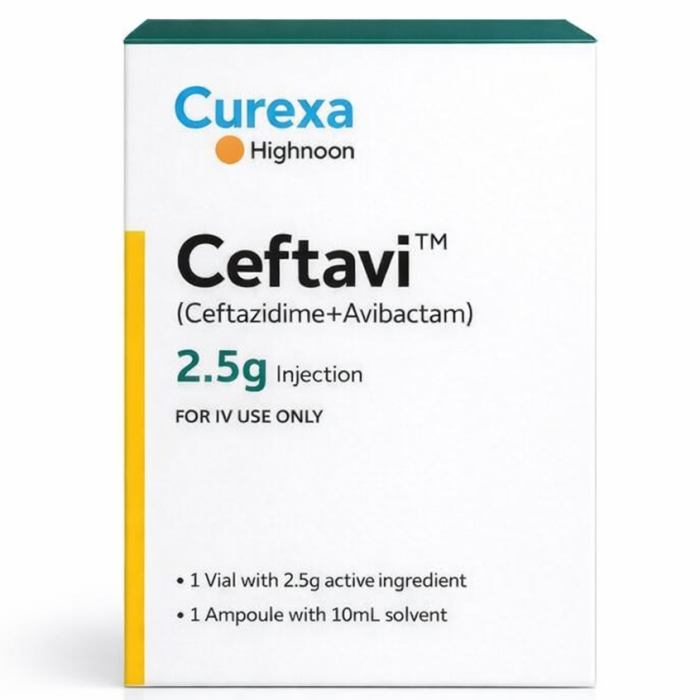
Ceftavi 2.5g Injection
Rs. 6,497.00
In stock
SKU
392185
Description
Ceftavi 2.5g Injection is a prescription intravenous antibacterial containing ceftazidime and avibactam. It is used under medical supervision for serious infections caused by susceptible Gram-negative bacteria, including certain resistant organisms.
- Manufacturer Name: Curexa Health (Pvt) Ltd
- Drug Class: Cephalosporin antibiotic and beta-lactamase inhibitor combination
- Dosage Form: Powder for Solution for Intravenous Injection/Infusion
- Storage: Store in the original packaging according to the manufacturer's instructions, protected from light and moisture. Do not freeze. Reconstituted and diluted solutions should be used within the recommended stability period and discarded if discolored or particulate.
- Pack Size: Pack of 1 Injection
Ceftavi 2.5g Injection Available Online in Pakistan
Dwatson offers Ceftavi 2.5g Injection at Rs. 6497, with fast, discreet delivery across Pakistan.
Ingredients
- Ceftazidime
- Avibactam
Benefits
- Complicated intra-abdominal infections, generally used with appropriate anaerobic coverage such as metronidazole.
- Complicated urinary tract infections, including pyelonephritis.
- Hospital-acquired or ventilator-associated bacterial pneumonia when caused by susceptible organisms.
- Serious infections caused by selected multidrug-resistant Gram-negative bacteria, including susceptible Enterobacterales and Pseudomonas aeruginosa.
Usage & Safety
For Adult
- Usual adult dose with normal renal function: 2.5 g intravenously every 8 hours, administered as a 2-hour infusion.
- For complicated intra-abdominal infection, additional anaerobic antibacterial coverage may be required.
- Dosage must be adjusted according to creatinine clearance: approximately 1.25 g every 8 hours for CrCl 31–50 mL/min; 0.94 g every 12 hours for CrCl 16–30 mL/min; 0.94 g every 24 hours for CrCl 6–15 mL/min; and 0.94 g every 48 hours for CrCl below 15 mL/min or hemodialysis, administered after dialysis when applicable.
- Treatment duration depends on the infection site, organism, clinical response, and specialist assessment.
For Children
- Use only on the recommendation of a pediatric infectious-disease specialist or hospital physician.
- For children 6 months to under 18 years, a commonly used regimen is 50 mg/kg ceftazidime plus 12.5 mg/kg avibactam intravenously every 8 hours by 2-hour infusion, with a maximum of 2 g ceftazidime plus 0.5 g avibactam per dose.
- For infants 3 to 6 months, specialist-directed dosing may be 40 mg/kg ceftazidime plus 10 mg/kg avibactam every 8 hours when renal function is adequate.
- Renal impairment requires dose adjustment. Dosing in neonates and infants under 3 months should be individualized in a hospital setting.
Side Effects
- Common effects may include diarrhea, nausea, vomiting, constipation, headache, fever, rash, and injection-site or infusion-related reactions.
- Laboratory abnormalities may include increased liver enzymes, changes in blood counts, and altered kidney-function tests.
- Serious effects may include severe allergic reaction, angioedema, bronchospasm, severe skin reactions, Clostridioides difficile-associated diarrhea, seizures, encephalopathy, or other neurological effects, particularly with renal impairment or excessive dosing.
- Seek urgent medical attention for breathing difficulty, facial or throat swelling, blistering rash, persistent watery or bloody diarrhea, confusion, or seizures.
Contraindications
- Known serious hypersensitivity to ceftazidime, avibactam, other cephalosporins, penicillins, or other beta-lactam antibiotics.
- Previous severe immediate allergic reaction, anaphylaxis, or serious skin reaction associated with a beta-lactam antibiotic.
- Use cautiously in patients with renal impairment, a history of seizures, or previous antibiotic-associated colitis.
- Do not use for viral infections or when the causative organism is not susceptible to the medicine.
Precautions & Warnings
- Probenecid may reduce renal elimination of ceftazidime and can increase antibiotic exposure; concomitant use should be reviewed by a physician.
- Other medicines that may affect kidney function, including potent nephrotoxic drugs, may increase the risk of toxicity and require kidney-function monitoring.
- Concurrent antibiotics should be selected according to culture results and infection site; metronidazole may be required for anaerobic coverage in complicated intra-abdominal infection.
- Tell the healthcare professional about all prescription medicines, nonprescription medicines, and supplements before treatment. No important food interaction is expected because this product is given intravenously.
Pregnancy
- Use during pregnancy only when clearly needed and when the expected benefit outweighs potential risk.
- Available ceftazidime experience has not identified a clear pregnancy-related safety signal, but human pregnancy data for the combination are limited.
- Ceftazidime enters breast milk in low amounts; avibactam has limited lactation information. Breastfeeding may usually be considered after medical assessment, with monitoring for infant diarrhea or oral thrush.
- Pregnant or breastfeeding patients should inform the treating physician before receiving this injection.
Description
Ceftavi 2.5g Injection is a prescription intravenous antibacterial containing ceftazidime and avibactam. It is used under medical supervision for serious infections caused by susceptible Gram-negative bacteria, including certain resistant organisms.
- Manufacturer Name: Curexa Health (Pvt) Ltd
- Drug Class: Cephalosporin antibiotic and beta-lactamase inhibitor combination
- Dosage Form: Powder for Solution for Intravenous Injection/Infusion
- Storage: Store in the original packaging according to the manufacturer's instructions, protected from light and moisture. Do not freeze. Reconstituted and diluted solutions should be used within the recommended stability period and discarded if discolored or particulate.
- Pack Size: Pack of 1 Injection
Ceftavi 2.5g Injection Available Online in Pakistan
Dwatson offers Ceftavi 2.5g Injection at Rs. 6497, with fast, discreet delivery across Pakistan.
Ingredients
- Ceftazidime
- Avibactam
Benefits
- Complicated intra-abdominal infections, generally used with appropriate anaerobic coverage such as metronidazole.
- Complicated urinary tract infections, including pyelonephritis.
- Hospital-acquired or ventilator-associated bacterial pneumonia when caused by susceptible organisms.
- Serious infections caused by selected multidrug-resistant Gram-negative bacteria, including susceptible Enterobacterales and Pseudomonas aeruginosa.
Usage & Safety
For Adult
- Usual adult dose with normal renal function: 2.5 g intravenously every 8 hours, administered as a 2-hour infusion.
- For complicated intra-abdominal infection, additional anaerobic antibacterial coverage may be required.
- Dosage must be adjusted according to creatinine clearance: approximately 1.25 g every 8 hours for CrCl 31–50 mL/min; 0.94 g every 12 hours for CrCl 16–30 mL/min; 0.94 g every 24 hours for CrCl 6–15 mL/min; and 0.94 g every 48 hours for CrCl below 15 mL/min or hemodialysis, administered after dialysis when applicable.
- Treatment duration depends on the infection site, organism, clinical response, and specialist assessment.
For Children
- Use only on the recommendation of a pediatric infectious-disease specialist or hospital physician.
- For children 6 months to under 18 years, a commonly used regimen is 50 mg/kg ceftazidime plus 12.5 mg/kg avibactam intravenously every 8 hours by 2-hour infusion, with a maximum of 2 g ceftazidime plus 0.5 g avibactam per dose.
- For infants 3 to 6 months, specialist-directed dosing may be 40 mg/kg ceftazidime plus 10 mg/kg avibactam every 8 hours when renal function is adequate.
- Renal impairment requires dose adjustment. Dosing in neonates and infants under 3 months should be individualized in a hospital setting.
Side Effects
- Common effects may include diarrhea, nausea, vomiting, constipation, headache, fever, rash, and injection-site or infusion-related reactions.
- Laboratory abnormalities may include increased liver enzymes, changes in blood counts, and altered kidney-function tests.
- Serious effects may include severe allergic reaction, angioedema, bronchospasm, severe skin reactions, Clostridioides difficile-associated diarrhea, seizures, encephalopathy, or other neurological effects, particularly with renal impairment or excessive dosing.
- Seek urgent medical attention for breathing difficulty, facial or throat swelling, blistering rash, persistent watery or bloody diarrhea, confusion, or seizures.
Contraindications
- Known serious hypersensitivity to ceftazidime, avibactam, other cephalosporins, penicillins, or other beta-lactam antibiotics.
- Previous severe immediate allergic reaction, anaphylaxis, or serious skin reaction associated with a beta-lactam antibiotic.
- Use cautiously in patients with renal impairment, a history of seizures, or previous antibiotic-associated colitis.
- Do not use for viral infections or when the causative organism is not susceptible to the medicine.
Precautions & Warnings
- Probenecid may reduce renal elimination of ceftazidime and can increase antibiotic exposure; concomitant use should be reviewed by a physician.
- Other medicines that may affect kidney function, including potent nephrotoxic drugs, may increase the risk of toxicity and require kidney-function monitoring.
- Concurrent antibiotics should be selected according to culture results and infection site; metronidazole may be required for anaerobic coverage in complicated intra-abdominal infection.
- Tell the healthcare professional about all prescription medicines, nonprescription medicines, and supplements before treatment. No important food interaction is expected because this product is given intravenously.
Pregnancy
- Use during pregnancy only when clearly needed and when the expected benefit outweighs potential risk.
- Available ceftazidime experience has not identified a clear pregnancy-related safety signal, but human pregnancy data for the combination are limited.
- Ceftazidime enters breast milk in low amounts; avibactam has limited lactation information. Breastfeeding may usually be considered after medical assessment, with monitoring for infant diarrhea or oral thrush.
- Pregnant or breastfeeding patients should inform the treating physician before receiving this injection.
| Manufacturer | Curexa Health (Pvt) Ltd |
|---|---|
| Ingredients | Avibactam, Ceftazidime |
| Size | Pack of 1 Injection |
| Prescription Required | No |
| Form | Injection |
| PrePayment | No |
| FreeShipment | No |
| Top Selling | No |
| Hot Deals | No |
| Sponsored | No |
| Medicated | No |