

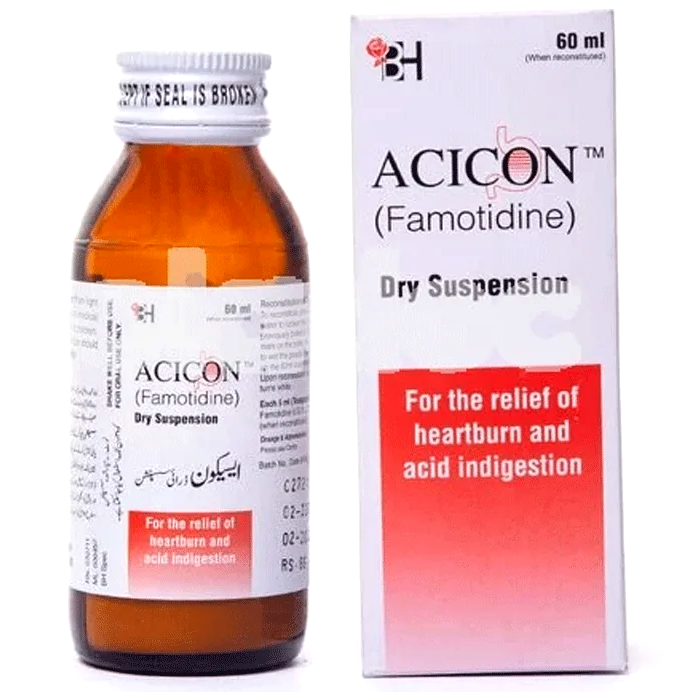
Acicon Suspension 60ml
Rs. 150.00
In stock
SKU
36737
Acicon Suspension 60ml. Description Acicon is an oral acid-reducing medicine used for acid-related gastrointestinal conditions, including peptic ulcers and gastroesophageal reflux disease.
Acicon is an oral acid-reducing medicine used for acid-related gastrointestinal conditions, including peptic ulcers and gastroesophageal reflux disease. It contains famotidine, an H2-receptor antagonist that reduces stomach acid production.
- Manufacturer Name: Barrett Hodgson
- Drug Class: Histamine H2-receptor antagonist; antiulcer medicine
- Dosage Form: Dry Oral Suspension
- Storage: Store at room temperature away from direct heat, sunlight, and moisture. Keep out of reach of children. After reconstitution, follow the product label or pharmacist’s instructions for storage and discard any unused suspension after the recommended period.
- Pack Size: Pack of 1
Acicon Suspension 60ml Available Online in Pakistan
Dwatson offers Acicon Suspension 60ml at Rs.150, with fast, discreet delivery across Pakistan.
- Famotidine 10 mg per 5 mL
- Relief and treatment of acid-related gastrointestinal symptoms
- Duodenal and benign gastric ulcers
- Gastroesophageal reflux disease and reflux-related acid injury
- Zollinger-Ellison syndrome and other hypersecretory conditions
- Prevention of duodenal-ulcer recurrence when prescribed
For Adult
- Use only as directed by a physician.
- Typical ulcer dosing may be 40 mg once daily at bedtime for 4–8 weeks, or 20 mg twice daily depending on the condition.
- For gastroesophageal reflux disease, typical dosing is 20 mg twice daily; higher doses may be prescribed for erosive disease.
- For Zollinger-Ellison syndrome, the dose is individualized and may require frequent administration.
- Shake the suspension well before each dose and measure it with an accurate oral syringe or measuring device.
- Dosage reduction may be required in significant kidney impairment.
For Children
- Use in children only under medical supervision.
- For peptic ulcer disease in children aged 1–16 years, a typical dose is approximately 0.5 mg/kg/day at bedtime or divided into doses.
- For gastroesophageal reflux disease, dosing may vary by age: approximately 0.5 mg/kg once daily in infants younger than 3 months, 0.5 mg/kg twice daily from 3–12 months, and 1 mg/kg/day divided into two doses from 1–16 years.
- For children aged 1–16 years, the usual maximum cited for reflux treatment is 40 mg twice daily; the prescriber should determine the appropriate dose and duration.
- Do not use in infants or children without a pediatrician’s advice.
Side Effects
- Common effects may include headache, dizziness, nausea, vomiting, diarrhea, constipation, abdominal discomfort, dry mouth, or fatigue.
- Muscle aches, cramps, or joint discomfort may occur.
- Rare effects include confusion, agitation, hallucinations, mood changes, sleep disturbance, palpitations, irregular heartbeat, or seizures.
- Serious allergic reactions may cause rash, swelling, wheezing, or difficulty breathing and require urgent medical attention.
Contraindications
- Known allergy to famotidine or any formulation ingredient.
- Previous serious hypersensitivity to another H2-receptor antagonist.
- Use cautiously and only with medical advice in moderate or severe kidney impairment, because dose adjustment may be needed.
- Persistent, recurrent, or alarming symptoms should be medically assessed to exclude gastric malignancy or other serious disease.
- Seek urgent care for facial or tongue swelling, breathing difficulty, severe rash, vomiting blood, or black stools.
Precautions & Warnings
- Famotidine may reduce absorption of medicines that require an acidic stomach, including ketoconazole, itraconazole, and some antiretroviral medicines such as atazanavir.
- Sucralfate and antacids may affect absorption or timing; follow the prescriber’s or pharmacist’s instructions and separate doses when advised.
- Tell the doctor about warfarin, phenytoin, theophylline, diazepam, propranolol, probenecid, and other prescription medicines.
- Avoid self-combining with other acid-suppressing medicines without professional advice.
- Alcohol and smoking may worsen acid-related symptoms and should be avoided or limited.
- Available observational data have not shown a clear increase in major birth defects with famotidine exposure, but it should be used during pregnancy only when clinically needed and recommended by a healthcare professional.
- Consult a doctor before starting treatment during pregnancy or when planning pregnancy.
- Famotidine passes into breast milk in low amounts and is not generally expected to cause adverse effects in breastfed infants; consult a healthcare professional before breastfeeding while using it.
- Monitor the breastfed infant for unusual gastrointestinal symptoms or other adverse effects.
| Urgent Delivery | No |
|---|---|
| Manufacturer | Barrett Hodgson |
| Ingredients | Famotidine |
| Size | Pack of 1 |
| Prescription Required | No |
| Form | Suspension |
| PrePayment | No |
| FreeShipment | No |
| Top Selling | No |
| Hot Deals | No |
| Sponsored | No |
| Medicated | No |