

30-Second Summary
Pollen allergy cases in Islamabad are rising due to climate change and early pollination of the Paper Mulberry
Peak pollen season now starts earlier and hits harder in specific high-risk sectors
Preventive treatment before March significantly reduces severe allergy symptoms
Trusted medicines, protective gear, and home solutions are easily available through D. Watson
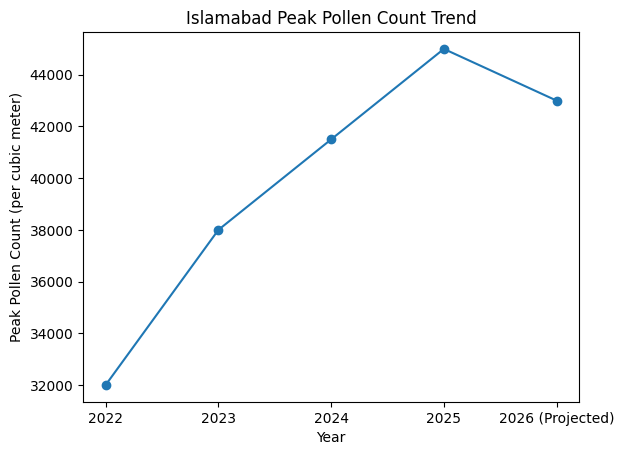
Is pollen allergy in Islamabad getting worse? Yes. Recent meteorological trends, hospital data, and environmental studies clearly indicate a steady increase in both pollen concentration and allergy-related complications in the city. Warmer winters and shorter cold spells are allowing Paper Mulberry, locally known as Jangli Shahtoot, to pollinate earlier and more aggressively. In 2026, peak pollen counts are expected to cross 40,000 pollen grains per cubic meter by mid-March, making Islamabad one of the most affected capitals in South Asia for seasonal allergies.
If you have ever experienced sneezing fits, itchy eyes, breathing discomfort, or asthma flare-ups during spring, this is no longer a mild seasonal issue. It is a growing public health concern that requires early awareness, timely prevention, and reliable solutions. Today is January 13, and for allergy sufferers, waiting until symptoms appear is no longer a safe strategy.
Understanding the Rising Burden of Pollen Allergy in Islamabad
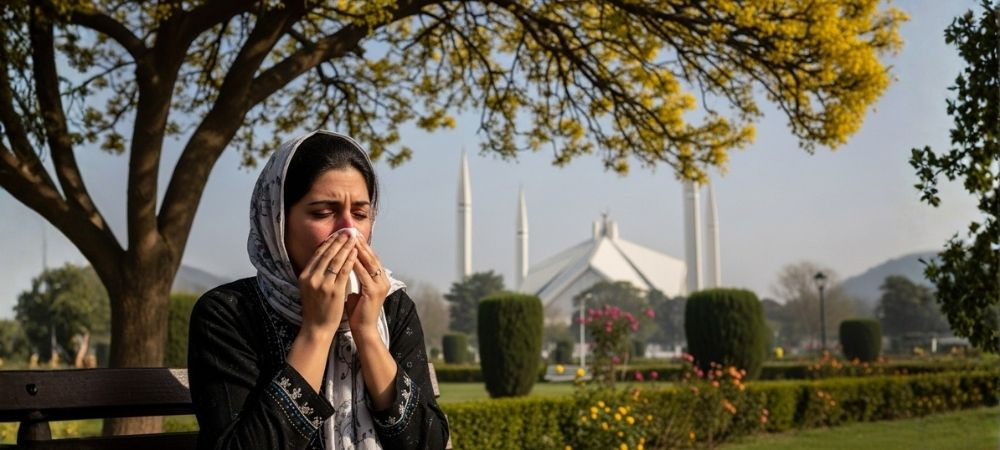
The increase in pollen allergy in Islamabad is not random. Multiple environmental and urban factors are contributing to this rise. Islamabad’s heavy reliance on Paper Mulberry trees in past urban planning decisions is one of the core reasons. These trees release microscopic pollen particles that easily travel through air currents and enter homes, offices, schools, and hospitals.
Climate change has further intensified the issue. Shorter winters mean trees begin pollination earlier, extending the allergy season by several weeks. Combined with rising air pollution, pollen particles stay suspended longer in the air, increasing exposure duration for residents. Hospitals in Islamabad report a year-on-year rise in allergy patients between February and April, with respiratory clinics experiencing peak pressure during March.
Figure: Rising peak pollen counts in Islamabad highlight worsening allergy severity over recent years.[1]
Pollen Allergy Season Islamabad: Timelines and Hotspots
Understanding when and where pollen exposure is highest allows people to plan prevention effectively. Structured data matters, and so does timing.
Pollen Allergy Season in Islamabad Dates
Pre-Season (January 15 – February 28):
The silent build-up phase. Pollen counts begin rising slowly. This is the ideal window to strengthen immunity and start preventative care.Peak Season (March 1 – April 15):
The danger zone. Pollen levels spike rapidly, triggering severe allergic rhinitis, sinus infections, and asthma attacks.Post-Peak (Late April):
Gradual decline, but sensitive individuals may still experience symptoms.
Worst Sectors for Pollen in Islamabad
Certain areas consistently record higher pollen concentrations due to dense Paper Mulberry plantations and airflow patterns.
H-8 sector (highest concentration zone)
G-6 and Aabpara
I-8 residential blocks
F-10 sector
Surroundings of Fatima Jinnah Park (F-9)
Shakarparian Hills and nearby green belts
Residents who regularly walk, jog, or commute through these areas face significantly higher exposure risks during March.
High-Risk Areas vs Exposure Level
Why Paper Mulberry Is the Main Culprit

Paper Mulberry allergy symptoms are often more severe than common seasonal allergies. This tree releases extremely fine pollen particles that penetrate deep into the nasal passages and lungs. Symptoms typically include persistent sneezing, nasal congestion, watery eyes, throat irritation, fatigue, and in severe cases, wheezing and shortness of breath.
What makes Paper Mulberry particularly dangerous is its pollen load. A single tree can release millions of pollen grains daily. When combined with Islamabad’s dry spring winds, these particles spread rapidly across sectors, affecting even indoor environments.
The Pre-Emptive Medical Guide for Allergy Sufferers
This is the most important section for anyone with a history of allergies, asthma, or sinus issues. Managing pollen allergies effectively requires a two-phase approach: prevention and relief.
The January–February Preventive Protocol
Pharmacists recommend starting preventative medication before symptoms appear. Montelukast Sodium is widely used in Pakistan to reduce airway inflammation and block allergy pathways. Common brands include Montika and Airtal. This medication takes approximately two to three weeks to build a protective barrier in the respiratory system.
Today is January 12. If you have suffered from allergies in previous years, do not wait for March. Starting your preventative course now prepares your lungs and immune system before pollen exposure peaks.
The March Relief Protocol
Once pollen levels rise sharply, antihistamines provide symptom relief. Fexofenadine, available under brands such as Fexet and Telfast, is effective for daytime use as it causes minimal drowsiness. Cetirizine, known locally as Rigix or Zyrtec, is commonly used for nighttime relief.
Always ensure your anti allergy medicine is purchased from a trusted source like D. Watson. Counterfeit antihistamines are common in open markets and may cause unexpected side effects such as excessive drowsiness or heart palpitations.
Lifestyle Adjustments That Actually Work
Medication alone is not enough during peak pollen season. Daily habits play a critical role in reducing exposure.
Limit outdoor activities during early morning hours when pollen counts are highest. Change clothes immediately after returning home and wash exposed skin. Keep windows closed during March, especially in high-risk sectors. Avoid drying laundry outdoors during peak season, as pollen sticks to fabric.
For individuals with breathing issues, a nebulizer machine can provide rapid relief during acute allergy episodes by delivering medication directly into the lungs.
Protective Gear and Home Solutions
Managing pollen exposure effectively requires a combination of the right protective gear outdoors and smart air-quality control inside your home. For residents of Islamabad, especially those living in high-risk sectors, these measures are no longer optional during peak pollen season.
Allergy Face Masks
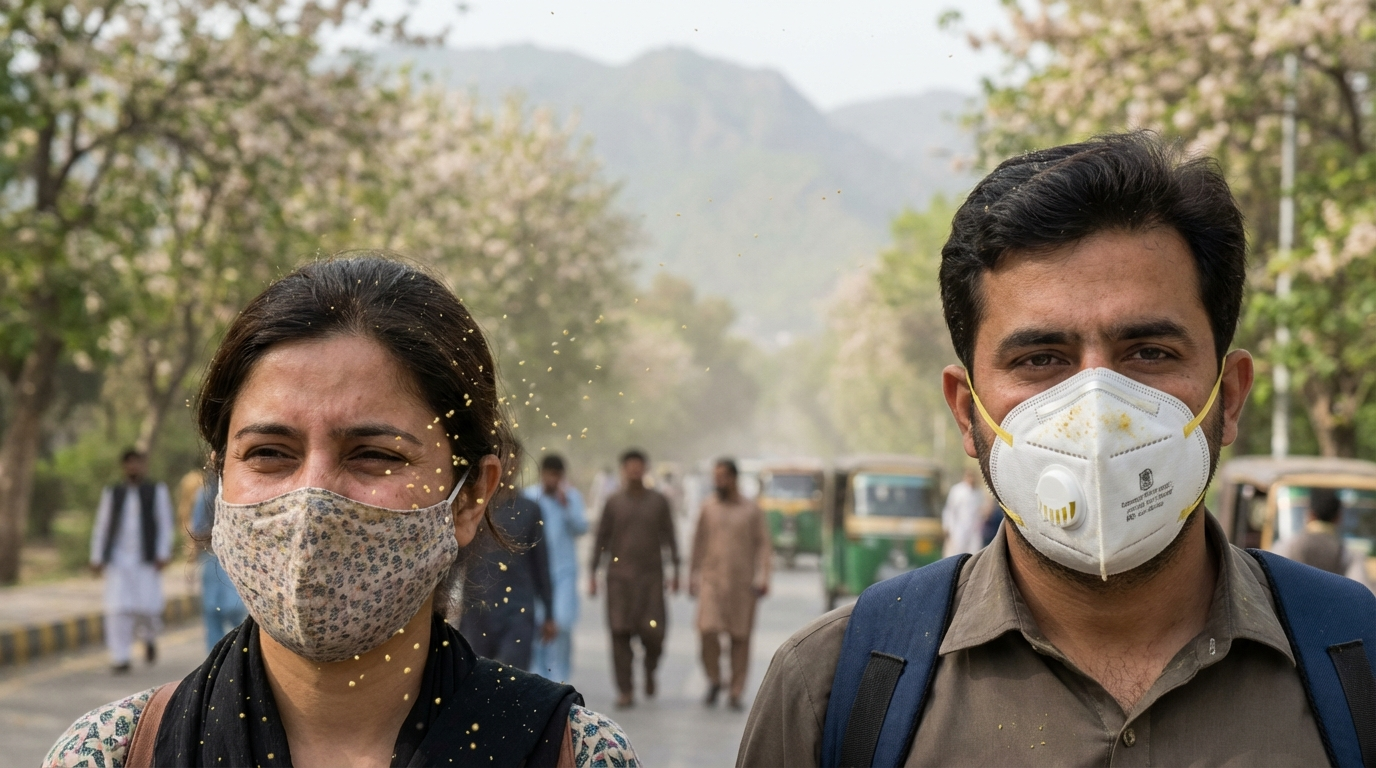
Many people assume that any face covering offers sufficient protection against pollen, but this is a common misconception. A regular cloth mask is designed mainly to block larger droplets, not microscopic pollen particles. Pollen grains released by Paper Mulberry trees are extremely fine and can easily pass through loosely woven fabrics, making basic masks ineffective for allergy prevention.
A certified allergy face mask with proper filtration is specifically designed to trap these tiny particles before they enter your nose and lungs. Masks with multi-layer filtration or respirator-grade standards provide a much higher level of protection, especially when commuting, walking, or exercising outdoors during March. For individuals who experience chest tightness, asthma symptoms, or severe nasal congestion, wearing a high-quality allergy mask can significantly reduce symptom severity and frequency. It also lowers dependence on emergency medication by minimizing direct pollen exposure.
Proper fit is equally important. A mask should seal well around the nose and mouth without gaps. Reusable masks should be washed regularly to prevent pollen buildup on the fabric, while disposable options should be replaced frequently during peak season.
Air Quality Control at Home
Outdoor pollen inevitably makes its way indoors through windows, doors, clothing, and even pets. Once inside, it can linger in dry air and continue triggering symptoms throughout the day and night. This is where an air humidifier plays a crucial role. By increasing indoor humidity levels, a humidifier causes pollen particles to become heavier and settle on surfaces instead of remaining suspended in the air. This reduces inhalation risk, particularly at night when nasal passages are already more sensitive.
However, humidity alone is not enough in high-exposure areas. Residents of sectors such as H-8, I-8, and F-10 should strongly consider using air purifiers equipped with HEPA filters. Unlike basic fans or coolers, HEPA filters are designed to capture physical particles like pollen, dust, and mold spores with high efficiency. Brands such as Philips and Beurer are well-regarded for their filtration performance and are suitable for bedrooms and living spaces where people spend most of their time.
To maximize effectiveness, keep windows closed during peak pollen hours, clean air purifier filters regularly, and place units in rooms where allergy sufferers sleep or work.
The Authenticity Check That Protects Your Health
One of the most overlooked aspects of allergy management in Pakistan is medicine authenticity. Pollen allergy medications are among the most commonly counterfeited pharmaceutical products in local markets. Fake antihistamines often mimic original packaging but may contain incorrect dosages, ineffective ingredients, or harmful fillers. These can lead to unexpected side effects such as extreme drowsiness, headaches, or heart palpitations, while failing to control allergy symptoms.
This is why it is essential to buy all allergy-related medicines, protective masks, and healthcare devices from a reliable pharmacy with verified sourcing. D. Watson Group is a trusted name in Pakistan, offering registered local and imported medicines, healthcare devices, wellness products, and protective gear at competitive prices nationwide. Choosing a reputable pharmacy ensures safety, effectiveness, and peace of mind during Islamabad’s challenging pollen season.
Conclusion
Pollen allergies in Islamabad are no longer a minor seasonal inconvenience. They are a growing health challenge driven by climate change, urban planning, and rising pollen counts from Paper Mulberry trees. Early prevention, informed medication use, protective gear, and indoor air management can significantly reduce symptoms and improve quality of life.
If you or your family struggles with seasonal allergies, now is the time to act. Visit D. Watson today to buy trusted anti-allergy medicines, certified allergy face masks, air humidifiers, nebulizer machines, and complete allergy care solutions from a pharmacy Pakistan relies on for quality, authenticity, and affordability.
FAQs
A: </span><span style="color:#000000; background-color:transparent; font-weight:400; font-style:normal; font-variant:normal; text-decoration:none; vertical-align:baseline; white-space:pre; white-space:pre-wrap;"> </span><span style="color:#000000; background-color:transparent; font-weight:400; font-style:normal; font-variant:normal; text-decoration:none; vertical-align:baseline; white-space:pre; white-space:pre-wrap;">The pollen season usually begins in mid-January, peaks from March 1 to April 15, and gradually declines by late April.
A: </span><span style="color:#000000; background-color:transparent; font-weight:400; font-style:normal; font-variant:normal; text-decoration:none; vertical-align:baseline; white-space:pre; white-space:pre-wrap;">Yes, data from recent years shows a consistent rise in pollen counts and allergy-related hospital visits due to climate change and early pollination.</span><span style="color:#000000; background-color:transparent; font-weight:400; font-style:normal; font-variant:normal; text-decoration:none; vertical-align:baseline; white-space:pre; white-space:pre-wrap;">
A: </span><span style="color:#000000; background-color:transparent; font-weight:400; font-style:normal; font-variant:normal; text-decoration:none; vertical-align:baseline; white-space:pre; white-space:pre-wrap;"> </span><span style="color:#000000; background-color:transparent; font-weight:400; font-style:normal; font-variant:normal; text-decoration:none; vertical-align:baseline; white-space:pre; white-space:pre-wrap;">H-8, G-6, I-8, F-10, and areas around F-9 Park and Shakarparian record the highest pollen levels annually.
A: </span><span style="color:#000000; background-color:transparent; font-weight:400; font-style:normal; font-variant:normal; text-decoration:none; vertical-align:baseline; white-space:pre; white-space:pre-wrap;"> </span><span style="color:#000000; background-color:transparent; font-weight:400; font-style:normal; font-variant:normal; text-decoration:none; vertical-align:baseline; white-space:pre; white-space:pre-wrap;">Symptoms include sneezing, runny nose, itchy eyes, throat irritation, coughing, wheezing, and breathing discomfort.
A: </span><span style="color:#000000; background-color:transparent; font-weight:400; font-style:normal; font-variant:normal; text-decoration:none; vertical-align:baseline; white-space:pre; white-space:pre-wrap;"> </span><span style="color:#000000; background-color:transparent; font-weight:400; font-style:normal; font-variant:normal; text-decoration:none; vertical-align:baseline; white-space:pre; white-space:pre-wrap;">During peak season in March, pollen counts frequently exceed 40,000 grains per cubic meter, especially in high-risk sectors.
A: </span><span style="color:#000000; background-color:transparent; font-weight:400; font-style:normal; font-variant:normal; text-decoration:none; vertical-align:baseline; white-space:pre; white-space:pre-wrap;"> </span><span style="color:#000000; background-color:transparent; font-weight:400; font-style:normal; font-variant:normal; text-decoration:none; vertical-align:baseline; white-space:pre; white-space:pre-wrap;">H-8 sector consistently records the highest pollen concentration, followed by G-6 and I-8.
References:
1-https://www.thenews.com.pk/print/1293571-pollen-count-exceeds-all-limits-in-islamabad?
https://pakobserver.net/pollen-count-in-islamabad-today-10-march-2025/
https://rnd.pmd.gov.pk/new/pollen-press-releases.php?