

30 Second Summary:
This guide explains what dehydration is and why it is common, especially in hot weather and during illness.
It covers common symptoms, causes, and warning signs to help identify dehydration early.
Readers will learn simple home treatments, including fluids, ORS, and hydrating foods.
The post also shares prevention tips and when to seek medical care for dehydration.
Have you ever felt dizzy, tired, or unusually thirsty during hot weather? These may not be simple signs of fatigue. They could indicate dehydration. In Pakistan, where temperatures often soar above 40°C, dehydration is extremely common, particularly during summer, Ramadan, and illness.
Dehydration occurs when your body loses more fluids than it takes in. Along with water, your body also loses essential electrolytes like sodium and potassium, which are important for normal body function. When these levels drop, it can affect energy levels, digestion, blood pressure, and overall health.
Understanding dehydration early helps prevent complications and allows you to treat it safely at home in mild cases. This guide explains everything you need to know, including causes, warning signs, home remedies, and prevention strategies for people living in Pakistan.
What Is Dehydration?
Dehydration happens when your body loses more fluids than it takes in. Water plays an essential role in maintaining body temperature, supporting digestion, lubricating joints, and carrying nutrients throughout the body. When fluid levels drop, the body struggles to perform these essential functions properly.
Dehydration can occur due to:
Excessive sweating in hot weather
Vomiting or diarrhea
Fever or infections
Not drinking enough water
Intense physical activity
Certain medications
Mild dehydration can often be treated at home, but severe dehydration may require medical attention.
Why Dehydration Is Common in Pakistan
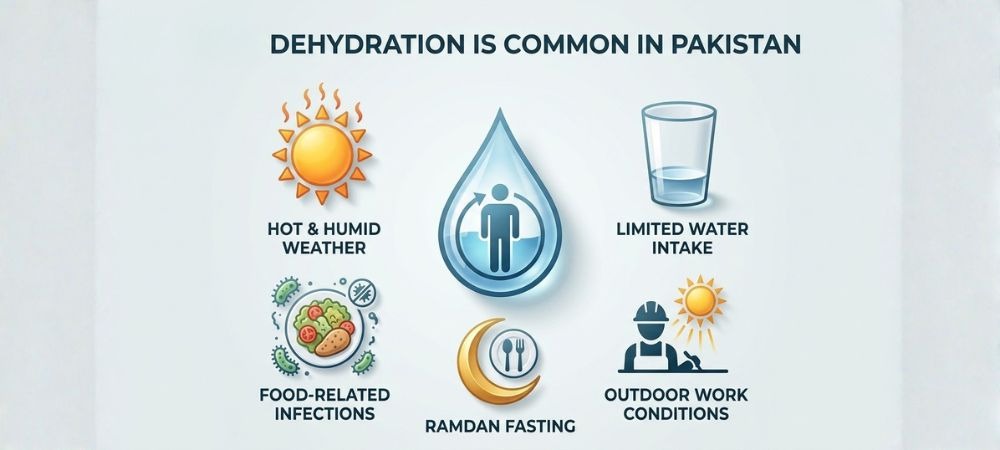
Several factors make dehydration more common in Pakistan:
Hot and Humid Weather
Summer months in cities like Karachi, Lahore, and Multan bring intense heat and humidity. This leads to excessive sweating and fluid loss.
Limited Water Intake
Many people do not drink enough water during busy workdays or travel.
Food-Related Infections
Contaminated food and water can lead to stomach infections, diarrhea, and vomiting, causing fluid loss.
Fasting During Ramadan
Long fasting hours, especially in summer, may increase the risk of dehydration if fluid intake is not managed properly.
Outdoor Work Conditions
Laborers, farmers, and delivery workers are more prone to dehydration due to prolonged exposure to heat.
Common Dehydration Symptoms
Recognizing early warning signs is crucial for preventing complications. Some people may experience mild symptoms, while others may develop severe ones.
Common dehydration symptoms include:
Dry mouth and lips
Increased thirst
Dark yellow urine
Reduced urination
Fatigue and weakness
Headache
Dizziness or lightheadedness
Dry skin
Muscle cramps
Severe symptoms may include:
Rapid heartbeat
Confusion
Sunken eyes
Low blood pressure
Fainting
If these severe symptoms appear, immediate medical care is necessary.
Causes of Dehydration
Understanding the causes can help prevent dehydration before it becomes serious.
1. Excessive Sweating
Sweating is the body's natural cooling system. However, excessive sweating during hot weather, exercise, or outdoor work leads to significant fluid loss.
2. Diarrhea
Diarrhea causes rapid fluid loss and electrolyte imbalance. This is particularly dangerous for children and older adults.
In such cases, doctors may recommend hydration therapy along with diarrhea treatment medicine to restore balance.
3. Vomiting
Vomiting prevents the body from retaining fluids. Continuous vomiting can quickly lead to dehydration.
When symptoms persist, proper hydration and medicine for nausea and vomiting may help control fluid loss.
In case of both diarrhea and vomiting, it is recommended to maintain intake of ORS. It's a rehydration solution available for both adults and kids on D. Watson.
4. Fever
High fever increases sweating and fluid loss. The body requires more fluids to maintain temperature. Make sure to have a good quality Digital thermometer at home to check the temperature. You can order one from D. Watson. In case of high fever, use the Cooling Gel Patch immediately to prevent it from increasing and consult a doctor right away.
5. Gastrointestinal Infections
Stomach infections are a common cause of dehydration, especially during the summer. These infections often lead to vomiting, diarrhea, and loss of appetite.
Doctors may recommend hydration and medicine for gastrointestinal infection when symptoms are severe.
6. Not Drinking Enough Water
Busy routines often cause people to ignore thirst. Over time, this leads to gradual dehydration.
Dehydration in Children
Children are more vulnerable to dehydration than adults. Their bodies lose fluids faster, especially during illness.
Signs of Dehydration in Children
Dry mouth
No tears while crying
Sunken eyes
Reduced urination
Irritability
Lethargy
Common Causes in Children
Diarrhea
Vomiting
Fever
Hot weather
Poor fluid intake
Parents should ensure children drink fluids regularly, especially during illness.
Dehydration in Adults
Adults often ignore dehydration signs due to busy schedules. However, dehydration in adults can affect productivity and overall health.
Symptoms in Adults
Fatigue
Headache
Reduced concentration
Dry skin
Muscle cramps
Risk Factors
Working outdoors
Intense workouts
Traveling in hot weather
Fasting without proper hydration
Adults should aim to drink water consistently throughout the day.
Dehydration in Elderly Individuals
Older adults are at higher risk due to:
Reduced thirst sensation
Chronic illnesses
Medications
Reduced mobility
Caregivers should ensure elderly individuals consume adequate fluids daily.
Treatment for Dehydration at Home
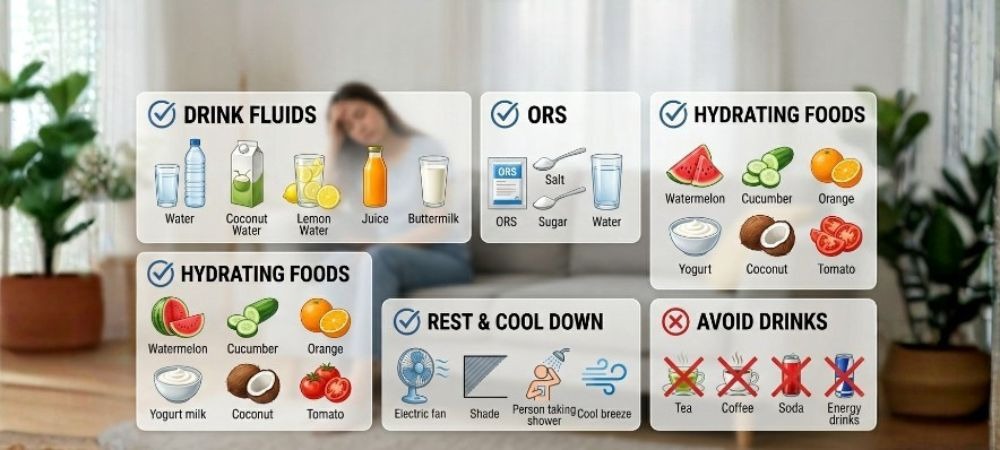
Mild to moderate dehydration can often be treated at home using simple remedies.
1. Drink More Fluids
Water is the best solution for mild dehydration. Drink small amounts frequently rather than large amounts at once.
Recommended fluids include:
Water
Coconut water
Lemon water
Fresh fruit juices
Buttermilk
Avoid caffeinated drinks as they may worsen dehydration.
2. Oral Rehydration Solution (ORS)
ORS helps restore fluids and electrolytes. It is especially useful during diarrhea or vomiting.
You can prepare ORS at home:
1 liter clean water
6 teaspoons sugar
½ teaspoon salt
Mix well and drink throughout the day. You can get powdered ORS sachets for adults and drinks for kids from D. Watson as well.
3. Eat Hydrating Foods
Some foods contain high water content and help restore fluids.
Best hydrating foods include:
Watermelon
Cucumber
Oranges
Yogurt
Coconut water
Tomatoes
These foods help replenish fluids naturally.
4. Rest and Cool Down
If dehydration is caused by heat:
Move to a cool place
Use fans or air conditioning
Take cool showers
Avoid sun exposure
5. Avoid Dehydrating Drinks
Limit:
Tea
Coffee
Soft drinks
Energy drinks
These beverages may increase fluid loss.
When to See a Doctor
Seek medical attention if:
Symptoms last more than 24 hours
Severe vomiting occurs
High fever develops
Blood appears in stool
Severe weakness occurs
Severe dehydration requires immediate medical care.
Prevention Tips for Dehydration
Preventing dehydration is easier than treating it. Follow these tips:
Drink Water Regularly
Do not wait until you feel thirsty. Drink water consistently throughout the day.
Carry a water bottle
Always carry a water bottle when traveling or working outdoors. For smaller kids, keep their training cup filled with clean drinking water along.
Eat Water-Rich Foods
Include fruits and vegetables in your daily diet.
Stay Indoors During Peak Heat
Avoid going outside during peak sunlight hours.
Hydrate During Illness
Drink more fluids when sick.
Monitor Urine Color
Light yellow urine indicates proper hydration.
Special Hydration Tips for Summer in Pakistan
During summer:
Drink 8–10 glasses of water daily
Consume fresh juices
Avoid outdoor activities during peak heat
Wear light clothing
Use hats or umbrellas
These simple steps reduce dehydration risk.
Hydration Tips During Ramadan
To avoid dehydration during fasting:
Drink water at Sehri and Iftar
Eat hydrating foods
Avoid salty foods
Limit caffeine
Drink fluids gradually
Proper planning helps maintain hydration.
Myths About Dehydration
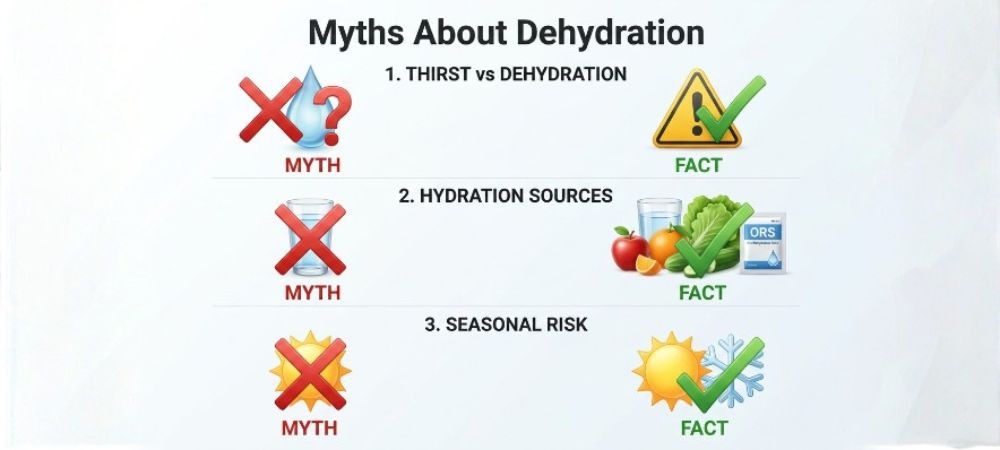
Myth 1: Only Thirst Means Dehydration
Fact: You may already be dehydrated before feeling thirsty.
Myth 2: Only Water Works
Fact: Fruits, vegetables, and ORS also help.
Myth 3: Dehydration Only Happens in Summer
Fact: It can occur in winter as well.
Takeaways:
Dehydration can affect anyone, but with the right awareness and timely action, it is completely manageable and preventable. Recognizing early warning signs, increasing fluid intake, and using simple home remedies can help restore hydration before the condition worsens. Children, older adults, and individuals exposed to heat or illness should take extra precautions, especially during hot weather and seasonal infections common in Pakistan.
Maintaining hydration is essential for overall health, energy levels, digestion, and immunity. Small daily habits such as drinking enough water, eating hydrating foods, and using oral rehydration solutions when needed can make a significant difference. However, if symptoms persist or become severe, timely medical care is important to avoid complications.
To stay prepared, keep essential hydration solutions and supportive medications at home. You can conveniently buy dehydration relief products, oral rehydration solutions, and related medicines from D. Watson. Shop trusted hydration products today to protect yourself and your family from dehydration and stay healthy all year round.
FAQs
A: Early signs of dehydration include dry mouth, increased thirst, dark yellow urine, fatigue, headache, and dizziness. Recognizing these symptoms early helps prevent severe dehydration and allows for quick treatment at home.
A: Most adults should drink at least 8–10 glasses of water daily. However, people living in hot climates like Pakistan may need more fluids, especially during summer, illness, or physical activity.
A: Completing the full course ensures that all bacteria are eliminated. Stopping early can allow some bacteria to survive, adapt, and become resistant.
A: Yes, mild to moderate dehydration can be treated at home by drinking water, oral rehydration solutions (ORS), fresh juices, and consuming hydrating foods like fruits and vegetables. Resting in a cool environment also helps restore fluid balance.
Q: Who is at higher risk of dehydration?
A: Children, elderly individuals, outdoor workers, and people with fever, diarrhea, or vomiting are at higher risk of dehydration. These groups should monitor their fluid intake carefully and increase hydration when needed.
Q: When should I see a doctor for dehydration?
A: You should seek medical attention if dehydration symptoms become severe, last longer than 24 hours, or include confusion, rapid heartbeat, fainting, or very little urination. Severe dehydration requires immediate medical care.